
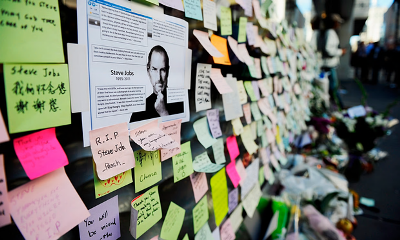

Since Steve Jobsթ§Չ-Չ§s death from cancer in 2011, the myths keep accumulating. Tim Adams assesses his legacy and speaks to Danny Boyle and Alex Gibney, directors of two new films թ§Չ-Չ one a drama, the other a documentary թ§Չ-Չ about the mysterious Apple boss
Silicon Valley billionaires, with their boundless digital dreams, have lately turned their attention to the ultimate challenge: the disruption of death. They want to live forever. Peter Thiel, PayPalթ§Չ-Չ§s founder, Larry Page of Google and Larry Ellison of Oracle have each poured some of their millions into projects that scour evolutionary history for the secrets of longevity, that aim to improve the DNA they were born with, or that explore ways to copy and save the circuits of a human brain թ§Չ-Չ notably their own consciousness թ§Չ-Չ to survive digitally long after their physical shutdown. Like moguls and megalomaniacs through the ages, they refuse to believe the timing and nature of their ending might be beyond their compass.
Immortality takes many forms, however. Old-fashioned myth and legend remain an option. Much of the tragedy of Steve Jobsթ§Չ-Չ§s truncated life թ§Չ-Չ he died in October 2011 at 56, eight years after being diagnosed with pancreatic cancer թ§Չ-Չ lies in the fact that for all his ungrammatical ability to թ§Չ-ժthink differentթ§Չ-Թ, even he had no answer to the rogue cells that killed him. Indeed, it seems the Apple co-founderթ§Չ-Չ§s stubborn hubris itself helped to dictate his last act. When he received the initial diagnosis of his cancer, he put off recommended surgery for nine months in his obsessive search for alternative cures on the internet, including contacting a psychic, by which time it was too late.
Jobs was, throughout his life, restless for alternative truths. Not surprisingly for an advocate of the eternal upgrade, he believed death, natureթ§Չ-Չ§s built-in obsolescence, to be թ§Չ-ժlifeթ§Չ-Չ§s greatest inventionթ§Չ-Թ. He was well aware that his own contribution to the fast-forward evolution of technology would necessarily be superseded by others.
However, although he never specifically embraced the idea of trying to incorporate his own consciousness into a digital circuit, he did the next best thing and made products that seemed to embody his singular philosophy. Not for nothing after he died did some of the legions of worldwide mourners, real and virtual, with their all-night vigils at Apple stores and to-camera eulogies, reimagine logos that revealed their creatorթ§Չ-Չ§s image, or hold aloft iPads picturing candles burning bright. Jobs was, or seemed to be, the eternal soul of their Machines.
read more here
Be the first to comment